
Collective Creation: PhDs

Luis Mora Matus: Metal-jazz. The use of contemporary progressive rock/metal practices to expand the contemporary jazz soloing idiolect

Luis Mora Matus

With the assimilation of pedal techniques developed by progressive metal drummers, this PhD research by Luis Mora aims to expand the expressive capabilities of drummers in the rhythmically complex context of contemporary jazz. To this end, the researcher works on three interacting fronts: the development of a new vocabulary for footwork in line with the jazz tradition; the incorporation of recent playing technique developments from progressive metal practice; and the expansion of the jazz drum kit with additional pedals.

Tomma Wessel: Instrument portrait: the Recorder
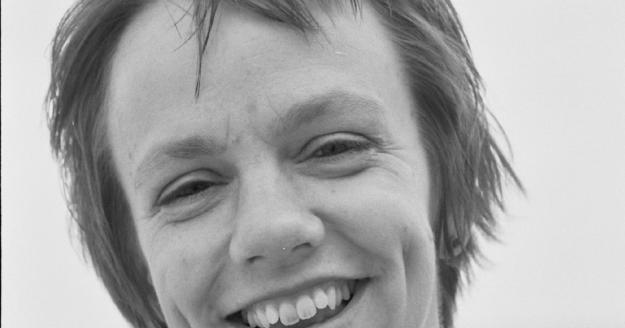
In this PhD research, Tomma Wessel focuses on the performance techniques and different types of the extended instrument family of the recorder. The acoustic properties, their repercussions on sound production and new sound possibilities are the focus. The processing of the results leads to a clear conceptual framework. Extensive sound and video examples serve to illustrate the in-depth research. The result will be a website accessible to composers and players.

Tomma Wessel

Kostas Tosidis: Bow techniques for guitar playing: arrangements of contemporary works for cello, violin and viola played on the classical guitar
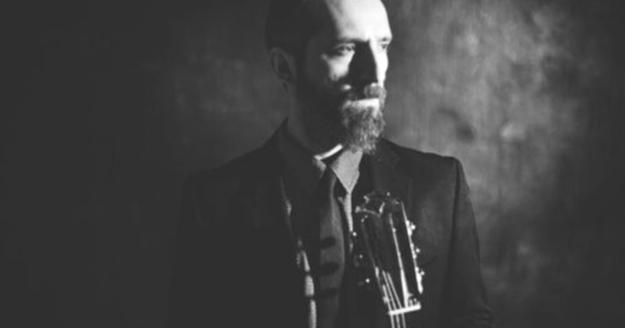
Kostas Tosidis

This doctoral research by Kostas Tosidis explores the importance of the bow in the guitar playing. In complete interaction with the repertoire of instruments such as the cello, violin and viola, it attempts to define techniques that until now have not been employed or extensively analyzed, with the central aim of optimizing the guitar playing. Much of the research focuses on documenting all these techniques and their application to modern guitar playing in a method that will include text and visual examples.
Reworking scores originally composed for these orchestral instruments poses a challenge for any guitar arrangement, especially when trying to find technical solutions for the use of the bow. One of the works that Tosidis arranges is the cello solo piece Sacher Variations by Witold Lutosławski (1975). Apart from the difficulties in the arrangement as far as the technical difficulties are concerned, there are also important problems relating to microtones and irregular intervals. The guitar’s repertoire is limited compared to that of other string instruments, and as a result, few prominent composers compose for the guitar. This research will not only expand the guitar repertoire with new compositions, but also test the technical possibilities of the instrument, including through commissioned works by composers such as Atanas Ourkouzounov, Marios Joannou Elias, Feliu Gassul, Marko Dottlinger, Giorgos Nousis, and Giannis Papakrassas.

Luca Isolani: The hybrid guitarist. An embodied approach to the interpretation of the folkloric elements in classical guitar repertoire
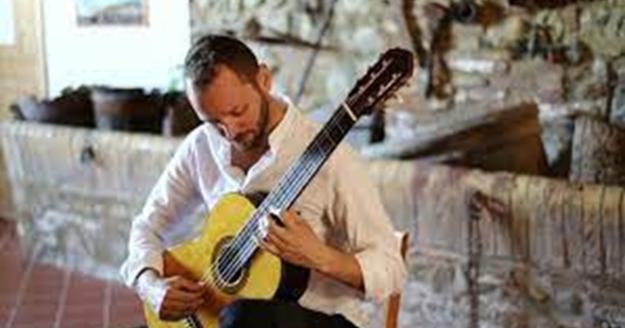
The modern guitarist is a hybrid musician: a performer who must master a wide range of technical and musical skills drawn not only from the classical toolbox, but also from the specific cultural contexts of the works. This becomes immediately apparent in repertoire strongly shaped by folkloric idioms. The heterogeneous nature of these folk elements calls on the performer not merely to engage with melodic and rhythmic approaches that lie beyond the classical tradition, but above all to explore the richness of the instrument in order to develop a varied and versatile playing style. This raises a number of important questions: could “embodied knowledge” (in its sociological, cultural, and physiological dimensions) serve as a means to reconfigure guitar practice? How can the performer identify, study, and embody folkloric elements? Is it possible to establish an exploratory methodology for integrating these elements into performance? Taking the tarantella form from Southern Italy and its interpretation on the chitarra battente as a point of departure, this doctoral research by Luca Isolani examines the folkloric characteristics present in the classical guitar repertoire and defines a set of tools for an exploratory methodology of embodiment. The study argues that when folkloric elements are closely observed, critically reflected upon, and sensitively embodied, they make a significant contribution to the refinement of performance.

Luca Isolani

Igor C. Silva: Mixed Music: nieuwe vormen van interactie tussen instrumenten en electronica
Igor C. Silva

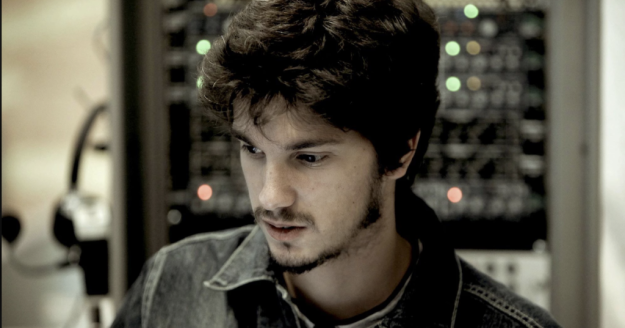
The contemporary compositional practice of mixed music, understood here as written music combining acoustic instruments with electronics, has a number of inherent problems. For example, the synchronization between the performer and the electronics, the complexity of digital interfaces and the need for an acoustic fusion between the two are some of the main issues discussed in academic research. This PhD project by Igor C. Silva aims to develop new systems that will provide simple, practical, and intuitive answers to the problems inherent in mixed music. In order to find answers to the questions mentioned above, an extensive portfolio of new pieces/projects written for several different instrument combinations will be composed that can provide new insights into the problem-solving process and even partially circumvent the aforementioned problems. In a later phase, these works will be performed and recorded in order to test the validity or enforceability of the created processes. The overarching goal is to create new approaches through these original compositions and to systematize them in compositional and performative practice, with the expectation of contributing to the artistic and academic development of the mixed music genre.