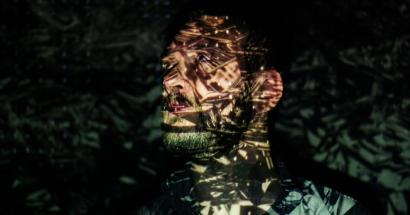
Luca Piovesan
News

Researcher in the Spotlight: Luca Piovesan

Between Composer and Performer: Exploring the Co-Composition Pendulum

When accordionist Luca Piovesan defends his doctoral dissertation on 11 December, he will not only conclude six intense years of research. He will also present an instrument whose boundaries he has literally opened up. His musical path began on a remote Italian farm, where three-year-old Luca took a pocketknife to his first accordion to find out how it worked. “Looking back, the little researcher was already there,” he laughs.

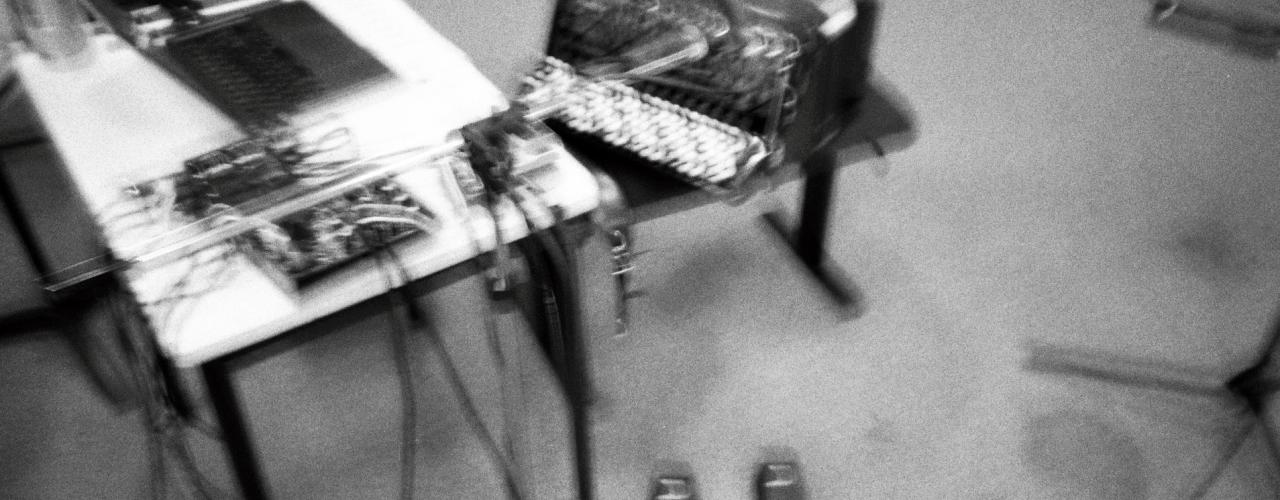
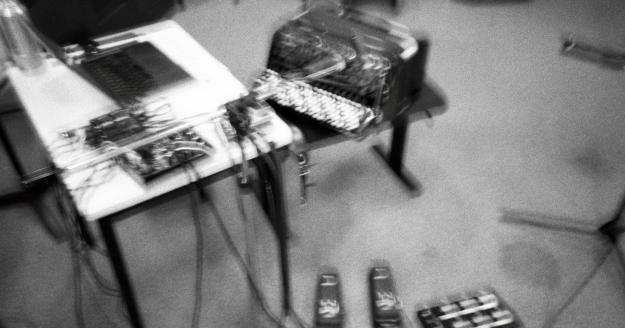
Today he lives in Brussels, holds both Belgian and Italian citizenship, and developed an entirely new instrument during his doctoral project. The Poliarmonica is a hybrid accordion that combines classical sound production with pedals, live electronics and computer processing. It became the engine for his research project The Co-Composition Pendulum, which examines the relationship between composer and performer within contemporary musical practice.

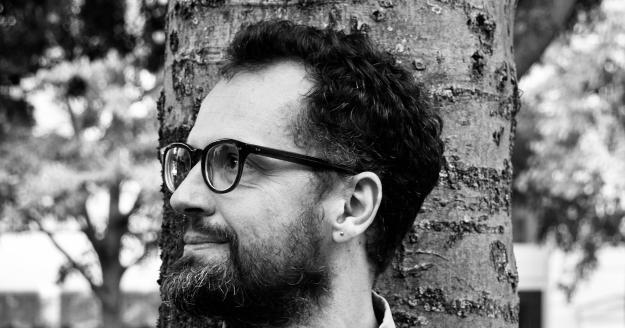
Luca Piovesan © Pablo Konrad

From Venetian concert life to Belgian research questions

Piovesan only moved to Belgium at the age of 36. In Italy he combined teaching with a full concert schedule, but it proved difficult to build a sustainable career as a professional accordionist. Collaborations with guitarist Maarten Stragier and later his membership in the Ictus Ensemble drew him increasingly to Brussels.

“Because I was constantly travelling back and forth, I could feel that this was a place where I could grow professionally. And, above all, this was a place with structures that genuinely support research,” Piovesan explains. When a research position opened in 2019 at the Koninklijk Conservatorium Brussel and VUB, he moved permanently.

An instrument that rearranges roles

The starting point of Piovesan’s research lies in a classic question from music theory. Who actually ‘composes’ a musical work? Historically the answer is straightforward. The composer imagines, the performer realises. But for an instrument without a deeply rooted tradition, such as the accordion, these roles often overlap.

“Many composers do not know the instrument well. This means that as a performer I am often the one who provides the first sonic idea from which an entire composition develops.”

By developing the Poliarmonica, he amplified this tension on purpose. The instrument became so complex, with added pedals, electronics and signal processing, that the composer needs the performer simply to understand it. “In the thesis I call it a black box that we have to open together,” he says.

The result is a practice that tends to lean much more towards co-creation than towards the traditional model. Not only are sound materials and techniques created jointly. Questions about authorship also begin to shift. “Who is the composer in that case? My case studies show that the boundary is far more porous than we assume.”
Luca Piovesan

A research journey shaped by reflection and crisis

Piovesan followed the six-year research format of KCB and VUB, a trajectory he describes as enriching, challenging and sometimes outright difficult. “The first years were mostly about understanding what artistic research actually is,” he says. Language courses, classes on academic writing and research seminars helped him anchor his practice within a broader field.

The real challenge came later. “After all the artistic collaborations, I had to commit everything to writing. That transition was the hardest part. What exactly am I contributing to the discipline? Where does the significance of this work lie?”

Thanks to guidance from his supervisor Maarten Stragier, mentorship from accordion pioneer Claudio Jacomucci and even support from VUB’s well-being service, Piovesan gradually found structure. “I have been a performer since I was twelve. But a doctoral project requires a different discipline. Learning to develop that discipline may have been the greatest gain.”
 

The finale: a diptych of concert and defence

On 11 December Piovesan will present three projects during the Ictus Invites series, each lasting about twenty-five minutes. It will not be a traditional doctoral performance but an immersive concert experience featuring three possible worlds of the Poliarmonica.

The next day he will hold his public defence at KCB. “It is special to show, after six years, how research, instrument development, collaboration and reflection come together. Artistic research is slow, complex and at the same time incredibly liberating. You add a small piece to a larger whole.”

What does he hope fellow musicians and young researchers will take from his trajectory?

“That instruments, just like people, can evolve. And that the relationship between composer and performer does not need to be fixed. It can be a pendulum, a movement back and forth that leads to new forms of creation.”

Deel dit