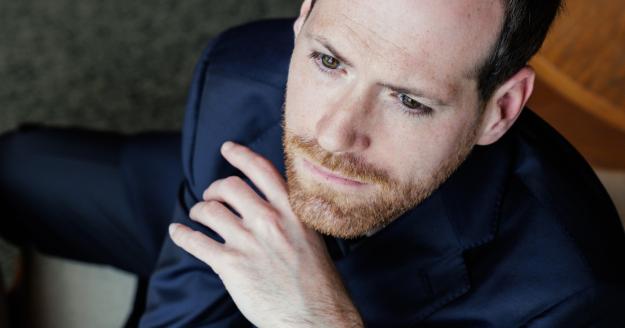
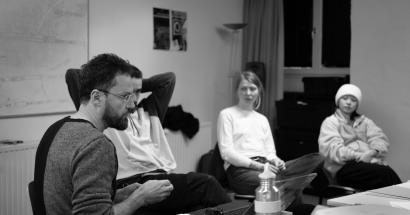
Marco Mantovani c Nine Nouvel @KCB 2026
News

Researcher in the Spotlight: Marco Mantovani

The inner workings of interpretation: Marco Mantovani on Schumann and on the performer’s interpretative process

Pianist Marco Mantovani completed his doctorate at KCB on the 24th of March. Rather than proposing a closed theory of interpretation, he takes a different approach: he reveals a process. His research focuses on what usually remains invisible: what happens before a performance becomes audible. “What you bring to the stage is only part of the whole,” he says. “Beneath it lies an entire layer of choices and associations.”

Mantovani grew up in Italy in a non-musical family, though one with broad musical tastes. “There was a bit of everything playing at home.” The piano, however, remained central. To pursue his studies, he eventually arrived in Brussels. “I thought I would stay temporarily, but this city offers many opportunities. You can really build something here.” He has now lived there for more than ten years.

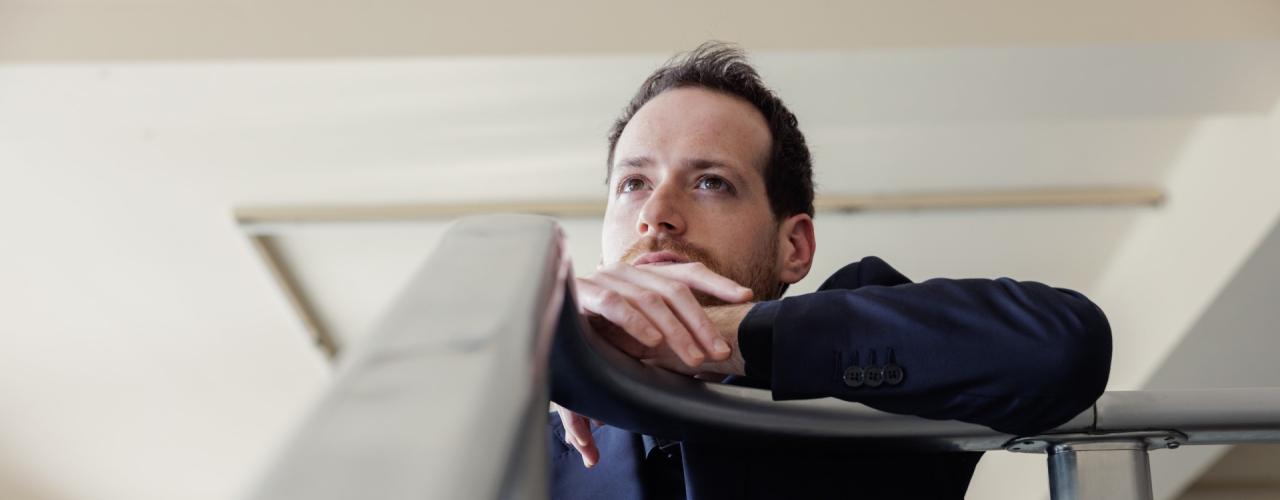
Marco Mantovani c Nine Nouvel @KCB 2026

Schumann as a starting point

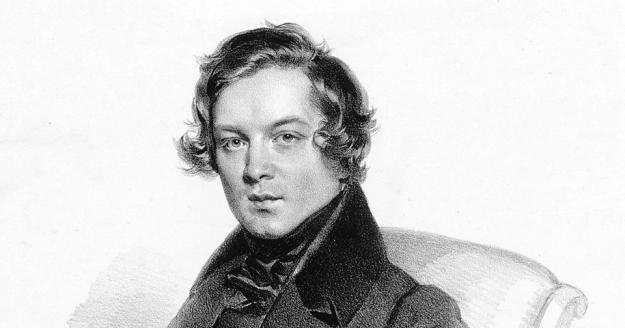
The core of his research lies in the work of Robert Schumann, a composer who attracted him early on. “What struck me immediately was the contrast in his music: very intimate, and then suddenly extremely powerful.” That tension has stayed with him.

His research focuses on six piano works from a short, intensely productive period. “Schumann often wrote in concentrated bursts. These pieces were written almost simultaneously, yet they differ strongly in character.” This combination of proximity and diversity forms the basis of the research.

The decision to study a limited corpus is deliberate. “Six works may seem little, but they still amount to hours of music. They allow for a deep investigation into the composer’s creative process.” For Mantovani, the focus is not only Schumann himself, but also the performer: how does one navigate such contrasting music within a single framework?

Literature, intuition, and the interpreter’s subconscious

In his doctoral research, Mantovani explores the resonance between Robert Schumann’s music and poetic literature. He reflects on how immersion in Schumann’s poetic world can enrich the performer’s imagination. By contextualising the role of the interpreter, as well as concepts such as intuition and the subconscious, he highlights the significant influence of extra-musical stimuli - especially literature and poetry - on his artistic process.

Mantovani starts from his own practice as a pianist. “When studying a piece, I am primarily guided by intuition.” His research aims to make this implicit process visible. He speaks of a “hidden kitchen.” “What you hear is the result. Beneath it lies a whole structure of thoughts and choices.” Artistic research, he argues, makes it possible to share that layer: not to impose a single interpretation, but to reveal the path leading to it.

Schumann himself serves as an ideal getaway into this literary dimension. Inspired by Dichtergarten für Musik, Schumann’s own collection of literary quotations on the transcendent power of music, Mantovani assembles his own personal anthology of texts. Rather than illustrating the music directly, these readings create a field of associations and sensitivities that inform his playing. “I’m interested in a certain sensitivity. You can recognise it in texts and in music alike. As a performer, you always carry your own background with you. With my research, I tried to expose it.”
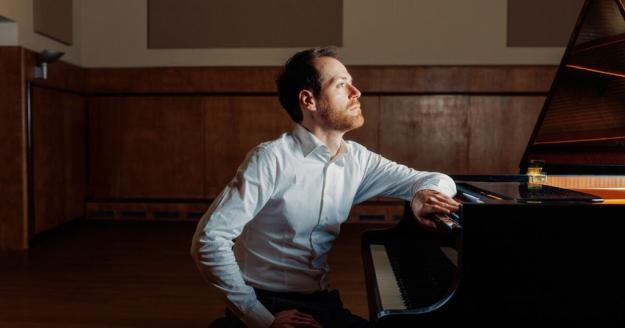
Marco Mantovani c Nine Nouvel @KCB 2026

A process without an endpoint

Mantovani experiences interpretation as something constantly shifting. “You always come back to a piece differently. You discover new connections.” Consequently, definitive conclusions remain elusive. 

He therefore sees his doctorate as a snapshot. “I show how I understand this music now. But that understanding keeps evolving.” For him, the value lies in the process itself. “There is no endpoint, only deepening.”

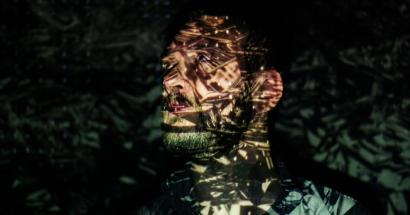
To share this evolving inner space, Mantovani developed The Poets’ Garden, a virtual 3D environment in which his recordings and his literary anthology come together. The installation provides a window into the performer’s inner artistic world. This metaphorical space visualises how literary fragments, triggered by music, emerge from the subconscious. Visitors are invited to explore a representation of the performer’s mind: wandering through, and occasionally getting lost in, its labyrinthine library.

Writing, sharing, and moving forward

Writing the doctoral thesis proved challenging. “As a musician, you work with sound. Writing requires a different discipline.” At the same time, it demands clarity. “You have to name what you do, and why.”

Having completed his doctorate, Mantovani continues to develop his research through concerts, lectures, and collaborations. He does not see it as a concluded project, but as a way of working.

What does he hope to communicate? “Interpretation is not fixed. It remains in motion. And it is worth sharing that process, not just the result.”

Marco Mantovani c Nine Nouvel @KCB 2026
Deel dit