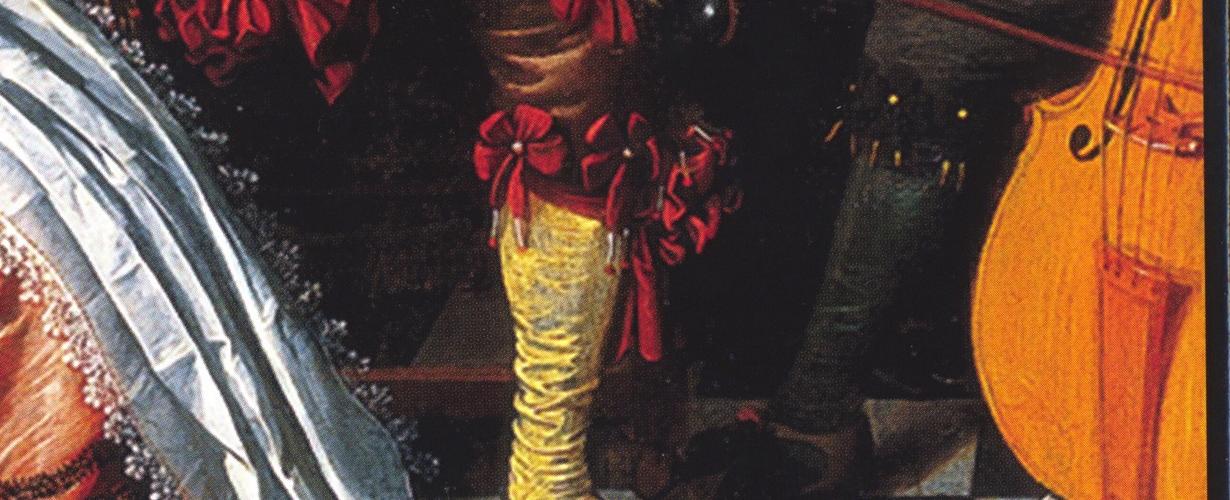
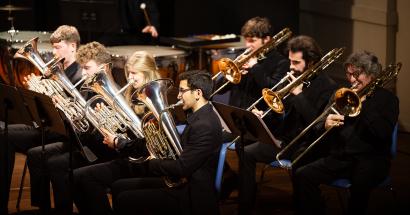
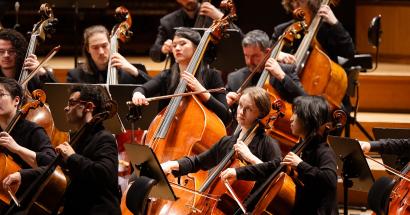
In the spirit of François Couperin’s Goûts réunis, which sought to unite the qualities of Italian and French music within a single work, this concert brings together the bass instruments of the K.C.B.’s HIP department (viola da gamba, bassoon, cello, lute, and harpsichord) within the evolving context of the encounter between French and Italian styles in early 18th-century Paris. The programme features duets and sonatas, framed by a selection of polyphonic gems from the Renaissance.
At the end of the 17th century, the preferred bass instrument in France was the viola da gamba, whose repertoire and technique reached remarkable heights. After the death of Louis XIV in 1715, the Regent, Philippe II, Duke of Orléans - a keen admirer of Italian music - invited soloists from across the Alps to perform in Paris. The cello, which had already been the leading bass instrument in Italy for several decades, was thus introduced to French audiences, bringing with it an advanced technique and a new repertoire developed in Modena, Bologna, and the Neapolitan conservatories.
The bassoon likewise underwent significant development as a solo instrument in Italy at the beginning of the Baroque period, with virtuoso works by Bartolomeo de Selma y Salaverde and Dario Castello, followed in the 18th century by no fewer than 37 concertos by Antonio Vivaldi.
The bass sonatas published in Paris during the Regency were largely conceived for these three instruments interchangeably, unless the composer himself was a specialist of one in particular.