Research in motion: A look back at 2025–2026
Photo:
Artistic research is part of everyday life at KCB. It does not only take place in doctoral programmes or conferences, but also in rehearsals, conversations, concerts and classes. It encourages our students, teachers and artists to keep searching, questioning and exploring new ideas.
These research activities have a direct impact on everyone who studies, works or visits here. Students are introduced to new perspectives, teachers feed their teaching with up-to-date insights, and music lovers gain a glimpse behind the scenes of artistic processes.
Throughout the 2025–2026 academic year, this research took shape in many different ways, both within and beyond the walls of the Conservatoire.
Space for Experiment: Polyphonic Performance Spaces
With Polyphonic Performance Spaces 2025, the Conservatoire once again organised its annual research festival dedicated to artistic research. This year’s edition, The Sound of Brussels, explored the city’s rich sonic landscape: past, present and future.
What makes this festival unique is that research literally moves through the city. Activities took place at a range of locations, including the Musical Instruments Museum, the Coudenberg Palace and Flagey.
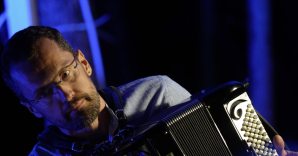
Students and visitors could take part in lectures, workshops, lecture-recitals and concerts featuring artist-researchers such as Sasha Rasmussen, Jeroen Billiet, Benjamin Glorieux, Nuno Cernadas, Richard Sutcliffe, Peter Van Heyghen, Florian Heyerick, Bruno Forment, Kris Defoort, Jeroen Van Herzeele, Stéphane Galland, Alexandre Piret, Luca Piovesan, Svetlana Maraš, Tomma Wessel, Frederik Neyrinck and Marta Gentilucci.
The Conservatoire’s research groups were strongly represented: Collective Creation, RES#19+, Composition, Music Writing and Musicology, Historically and Culturally Informed Performance Practice (HIPP), and Jazz, Improvised and Popular Music (JIP), with the exception of the Musical Theater Master's Programme and the Educational Master in Music.
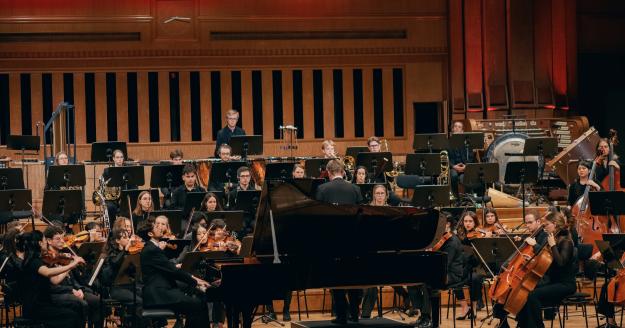
One of the highlights was the concert by the KCB Symphony Orchestra in Studio 4 at Flagey, in collaboration with the Liszt Institute Brussels and conducted by Christian Arming. Students performed works by Béla Bartók, Zoltán Kodály and Franz Liszt.
By making research visible and tangible in this way, the festival invites students, artists and audiences alike to actively engage in the artistic process.
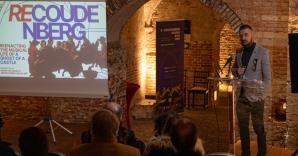
© Reda Izo
18.11.2026
Eclectic Lunch Concert
© Dejan Romih
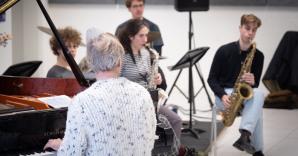
24.11.2026
Sound of Brussels
© Matteo Gemolo
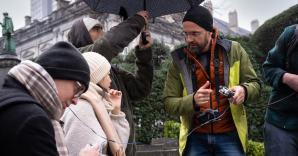
26.11.2026
Jazz Workshop with Kris Defoort
© Dejan Romih
27.11.2026
Field Recording
© Dejan Romih
International Perspectives: INARJ Conference in Brussels
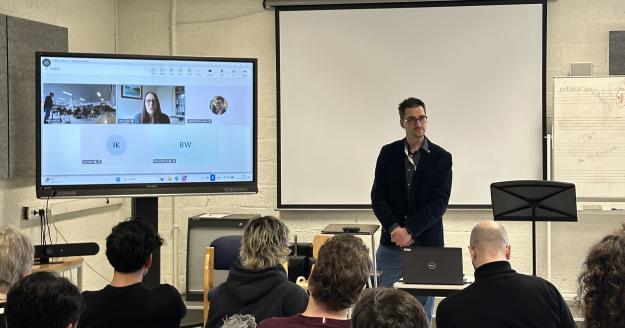
In February 2026, the fifth conference of the International Network for Artistic Research in Jazz (INARJ) took place in Brussels. KCB welcomed researchers, performers and teachers from different countries for lectures, performances and discussions on artistic research in jazz.
Read more in this article: INARJ Conference Comes to Brussels for the First Time: Anniversary Edition on ‘Place’ and ‘Space’
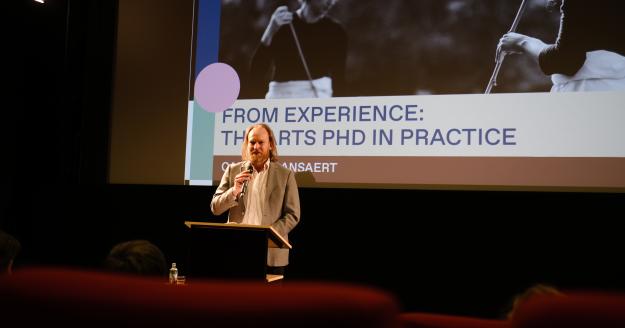
Research in Practice: From Experience – The Arts PhD in Practice
© Jori Galama
With From Experience: The Arts PhD in Practice, the doctoral trajectory in the arts was made concrete and relatable. Doctoral candidates and recently graduated researchers shared their experiences: how does a research project evolve? How do you combine artistic practice with academic reflection? What does research mean for a performing musician or creator?
For students, this day offered a realistic insight into a possible future trajectory. For other visitors, it made clear how artistic research emerges from practice, experimentation and creation.
This initiative, organised by Kunstenplatform Brussel, also provided an opportunity to meet fellow researchers from international partner institutions, including the universities of Stellenbosch, Gothenburg and Warwick, as well as VUB and RITCS School of Arts.
Want to know who presented? Click here
Artistic Research Trajectories: Doctoral Defences
The doctoral defences in the arts of Luca Piovesan, Piergiorgio Pirro and Marco Mantovani marked important moments in the academic year.
These trajectories were not only developed within KCB, but also in close collaboration with the professional arts field. The artistic presentations that formed part of their doctoral work took place at leading venues such as Flagey (Marco Mantovani), Jazz Station (Piergiorgio Pirro) and Ictus Studio (Luca Piovesan). These concerts formed the artistic culmination of their research and were an integral part of the defence.
These public defences show what years of artistic research can lead to. At the same time, they are inspiring for students at the beginning of their journey: they demonstrate how research can grow out of artistic curiosity into new knowledge, new concert formats and new ways of listening.
Click below for interviews about the fascinating trajectories of these three musicians.
Dialogue and Exchange: What’s (o)up, doc?
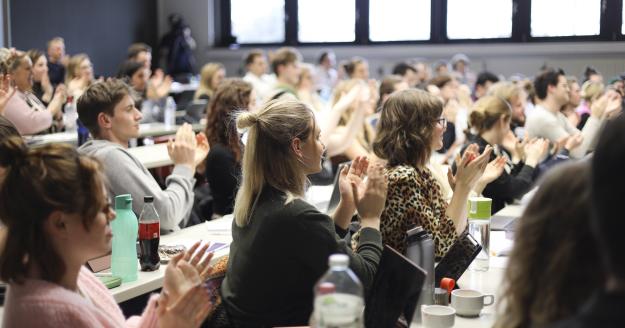
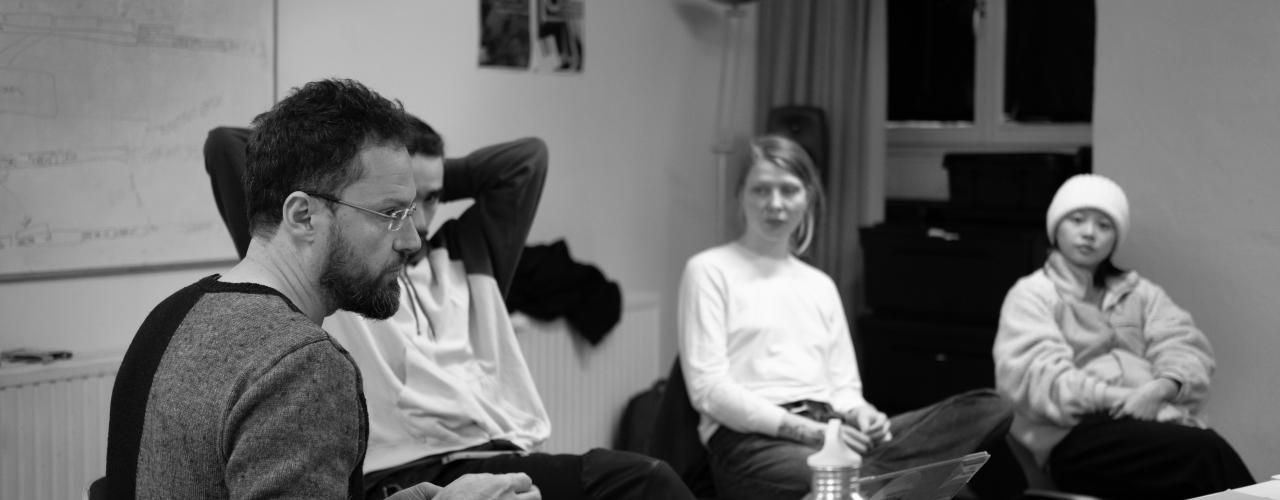
The What’s (o)up, doc? series brought researchers, students and audiences together on a monthly basis around artistic research in development. Not finished results, but projects that are still growing and evolving. Each session gave the floor to researchers from one of the research groups, while the audience could enjoy a bowl of soup.
This makes these sessions particularly valuable for students and interested visitors: you gain insight into how research really works, which questions artists are asking and how artistic decisions take shape. Thanks to the open format, research becomes tangible and accessible, even for those who are not themselves involved in a research trajectory.
External groups also found their way to these sessions. For instance, KCB welcomed students from arts secondary schools, offering them an early encounter with artistic research.
© Kato Geuens
Focus and Depth: Research Days in Musical Theatre, Jazz and Composition, Music Theory and Musicology
© Kato Geuens
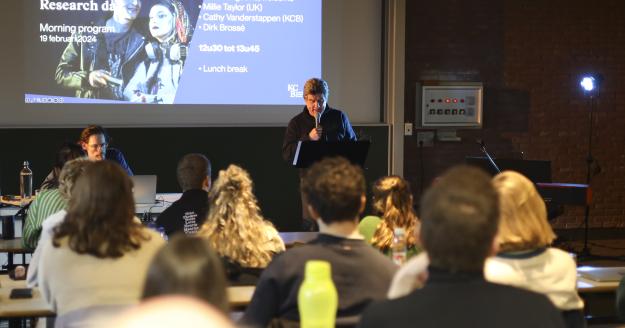
During the research days, encounter and exchange were central. Students, researchers, performers and guest speakers shared work, ideas and methods. The combination of artistic practice and reflection makes a real difference for students and young researchers: they meet alumni, fellow researchers and professionals active in the field, and gain insight into how research also plays a role in musical theatre, jazz and the study of (new) compositional techniques.
Musical Theatre
The Musical Theatre research day brought together researchers and practitioners from the field. The programme included lectures by Prof. Millie Taylor, Sara Gracia, Mira Delbaen, Dieter Spileers and Peter Spaepen.
Jazz
The jazz research day connected to international developments in artistic research in jazz. Improvisation, collective creation and artistic identity were central in presentations and performances. Prof. Dr. Michael Kahr, a leading expert in artistic research in jazz and founder of INARJ, was invited as keynote speaker.
Composition, Music Theory and Musicology
The research group Composition, Music Theory and Musicology focused specifically on students from these programmes. Following lectures by pianist-composer Gabriele Manca and researcher Carl Van Eyndhoven, a public masterclass was given by Gabriele Manca.
Reflection and Education: Inspiring Lectures
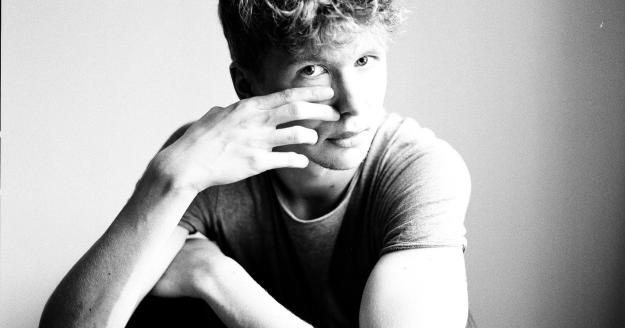
Inspiring Lectures by Tim Taveirne
© Alexia Leysen
Throughout the season, the Inspiring Lectures organised by the Educational Master in the Arts brought together researchers, educators and artists around current themes in art and education.
These lectures, organised annually by the Educational Master in the Arts research group, offer students moments to broaden their perspective and connect artistic practice with education and society. For a wider audience, they provide concrete insights and new perspectives from the field.
Want to know more about the Educational Master in the Arts? Join the upcoming online information session on 27 June.
Research as a Shared Practice
What connects all these activities is their open character. Artistic research at KCB does not take place in isolation, but in dialogue with students, colleagues, partners and audiences.
Through collaborations with partners such as Vrije Universiteit Brussel, Erasmushogeschool Brussel, the International Network for Artistic Research in Jazz, numerous international universities, the Liszt Institute Brussels and Brussels-based cultural institutions such as Flagey and the Musical Instruments Museum, a research environment is growing that opens doors for others.
For students, this means access to new ideas, artists and international networks. For music lovers, it offers a closer connection to the creative process. And for the city of Brussels, it means that KCB actively contributes to a vibrant cultural and artistic landscape.
The past academic year made one thing clear: research is alive at KCB, and everyone can benefit from it.
© Dejan Romih